Social media
Errol Musk’s Epstein Conspiracy Claim Sparks Debate on Tech’s Information Ecosystem
A Bizarre Claim Enters the Tech Discourse
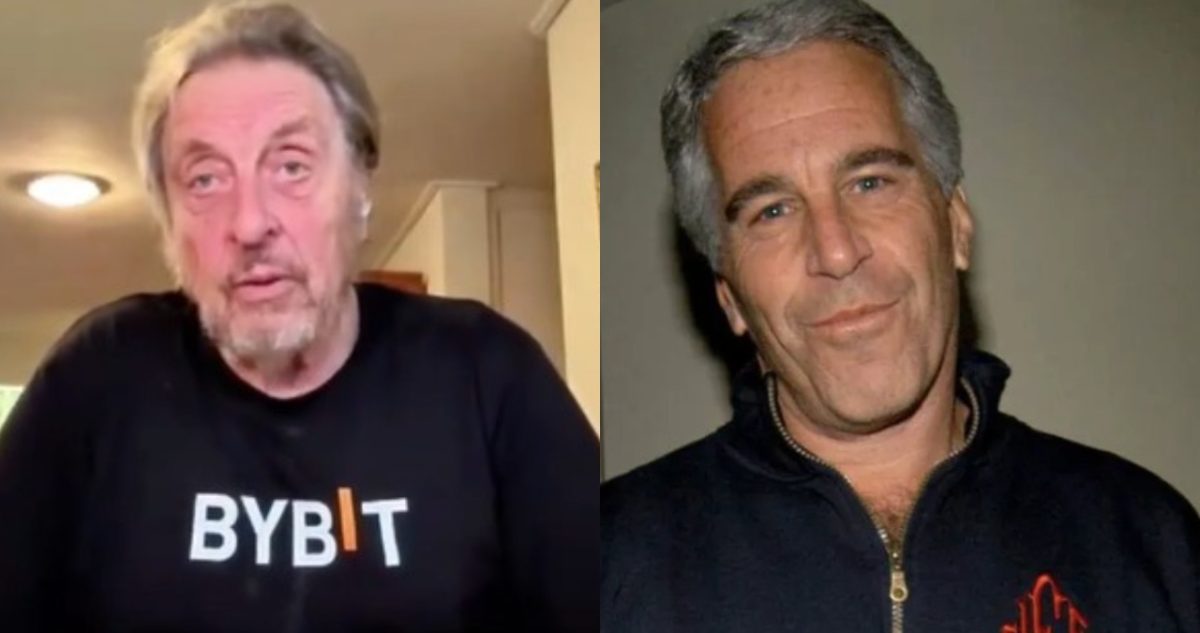
In a development that seems more at home in the darker corners of internet forums, Errol Musk, father of tech mogul Elon Musk, has thrust a controversial conspiracy theory into the spotlight. During a recent interview, the elder Musk made the startling assertion that financier and convicted sex offender Jeffrey Epstein, who died in a Manhattan jail cell in 2019, is actually still alive. This claim, devoid of any presented evidence and roundly dismissed by official investigations, has nonetheless ignited a fresh wave of online debate, demonstrating how unverified narratives can permeate even the edges of mainstream tech conversation.
The Mechanics of Modern Mythmaking
For a technology audience, this episode is less about the veracity of the claim itself, which is negligible, and more about the infrastructure that allows such ideas to propagate. The mechanisms are familiar: a statement from a figure with tangential fame, amplified through social media algorithms hungry for engagement, and then dissected across countless digital platforms. It’s a case study in how information, or more accurately disinformation, travels in our hyper-connected age. The core question isn’t about Epstein’s status but about our own digital ecosystems; why do certain ideas, regardless of their factual grounding, find such fertile soil online?
We’ve seen this pattern before with other conspiracy theories, from flat-earth advocates to elaborate election fraud narratives. The playbook often involves leveraging a kernel of public mistrust, in this case surrounding the official circumstances of Epstein’s death, and building an elaborate, alternative explanation. The technical community understands systems, and this is a social system operating with predictable, if troubling, logic. It exploits cognitive biases and platform design features with a frightening efficiency that any app developer might grudgingly admire.
Context and the Weight of a Name
Errol Musk is not a central figure in technology, but his familial connection guarantees his words a certain amplification. This dynamic is crucial. When a statement is made by someone adjacent to immense influence, it receives a level of scrutiny and circulation far beyond its intrinsic merit. It’s a form of reflected celebrity, a glitch in the attention economy where proximity to fame can grant a megaphone. For developers and tech observers, it’s a reminder of how data, in this case a personal statement, can be weighted incorrectly by systems, both human and algorithmic, that prioritize association over substance.
The claim itself resurfaces long-debunked conspiracy theories about Epstein’s death, which was officially ruled a suicide by the New York City Medical Examiner’s Office after a thorough investigation. Multiple independent reviews have upheld this finding. Yet, the persistence of the alternative narrative speaks to a deeper, more systemic issue: a crisis of institutional trust that technology has both revealed and, in some cases, exacerbated. Can we build platforms that promote authoritative information without veering into censorship? That’s the multi-billion dollar question haunting every major social network.
SEO, Sensationalism, and the Attention Market
From an SEO and content perspective, the lifecycle of this story is textbook. A provocative headline containing high-traffic keywords like “Elon Musk” and “Jeffrey Epstein” is virtually guaranteed to generate clicks and shares. This creates a perverse incentive for publishers. They must balance reporting on a bizarre news item with the responsibility not to lend undue credibility to baseless claims. It’s a tightrope walk. For tech copywriters, it’s a lesson in how to handle trending topics that are sensational but substantively hollow; the challenge is to provide context and analysis that adds value beyond merely repeating the shock factor.
Imagine an API that returns “controversy score” instead of truth value; that’s essentially how much of the digital media landscape operates. The Errol Musk story scores highly on controversy but near zero on verified fact. Yet, the economic engines of the web, driven by ad impressions and engagement metrics, are often blind to that second metric. This creates the endless feedback loop we see today, where notoriety and credibility become tragically uncoupled.
Broader Implications for the Tech Industry
This incident, while seemingly peripheral, touches on core tech issues: content moderation, algorithmic amplification, and the ethical design of information systems. When the father of one of the world’s most influential tech CEOs promotes a conspiracy theory, it indirectly reflects on the platforms his son’s companies interact with and the broader culture of discourse they inhabit. It’s a reminder that the personal beliefs of those in tech’s orbit can have unpredictable public relations and societal consequences. In an industry obsessed with scaling solutions, how do we scale critical thinking?
Furthermore, it highlights the enduring challenge of “epistemic security” in the digital realm. Just as we secure networks against malware, we must consider how to fortify our public conversations against informational viruses. This isn’t just a social media problem, it’s a systems design problem. The protocols of the early internet were built to move information, not to vet its quality. We are now living with the consequences of that foundational design choice, trying to retrofit trust and verification onto a system engineered for openness and speed.
Looking Beyond the Headline Hype
So, where does this leave us? The debate Errol Musk references isn’t a legitimate forensic one, but it is a very real cultural and technological one. It’s a debate about the tools we’ve built and how they are being used, often in ways their creators never intended. The next frontier for tech innovation may not be a faster processor or a new app, but more robust frameworks for establishing consensus reality in a fragmented digital world. Solving for this would be a truly world-changing algorithm, one that could potentially do more good than any rocket or electric car.
The forward-looking insight here is that the tech industry’s greatest challenge is increasingly human, not silicon-based. Building better filters, both algorithmic and cognitive, is perhaps the most critical engineering task of our generation. As artificial intelligence grows more sophisticated in generating and parsing content, the line between plausible fiction and documented fact will only blur further. The episode involving Errol Musk is a small, strange symptom of a much larger condition, one that the brightest minds in technology will need to address, not with code alone, but with a renewed commitment to the integrity of our shared information space.