Tutorials
Navigating the Grid: A Guide to Conquering The New York Times’ Pips Puzzle
When the Daily Domino Game Leaves You Stumped
We have all been there, staring at a digital grid, our morning coffee cooling as a puzzle refuses to yield its secrets. Whether you are breezing through the Easy mode, wrestling with Medium’s clever constraints, or facing down the formidable challenge of Hard, hitting a wall in your daily game ritual can be a uniquely frustrating experience. For devotees of The New York Times’ expanding suite of brain-teasers, that moment of gridlock has a new name: Pips.
The Genesis of a Modern Domino Experience
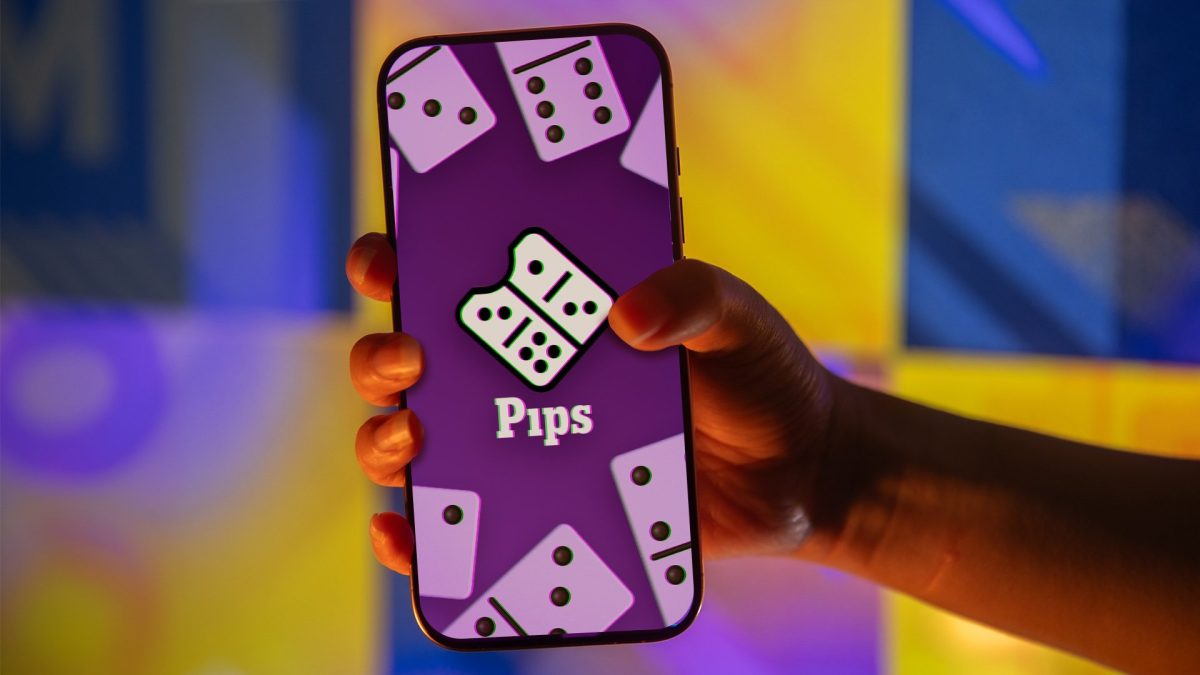
Released in the late summer of 2025, Pips quickly carved out its niche within the esteemed NYT Games catalog. The premise is elegantly simple yet deceptively complex, taking the classic concept of dominoes and reimagining it for a solitary, contemplative player. Instead of matching tiles across a table with friends, you are tasked with fitting polyomino shapes, each marked with familiar domino pips, into a confined board. The result is a satisfying blend of spatial reasoning and logical deduction that feels both comfortingly familiar and refreshingly novel.
This digital transformation taps into a broader trend of adapting analog classics for on-demand, single-player consumption. Think of it as the logical successor to the crossword or Sudoku, a tactile puzzle reborn for the swipe-and-tap era. Its daily refresh cycle is deliberately designed to cultivate habit, offering a fresh mental workout with each sunrise. But what happens when your strategic pipeline runs dry and the pips just will not align?
Decoding the Challenge: Beyond Basic Hints
Currently, the in-game support system can feel somewhat limited if you find yourself truly stuck. The native hint structure may point you in a general direction, but it often stops short of illuminating the specific logical misstep that has derailed your progress. This is where understanding the game’s underlying mechanics becomes more valuable than any simple clue.
Success in Pips is less about frantic trial and error and more about systematic placement strategies. A key insight is to start by identifying the board’s most constrained areas, those odd-shaped corners or narrow channels that only a few specific tile shapes could possibly occupy. It is akin to solving a jigsaw puzzle by first connecting the edges; you establish a framework that makes filling the interior progressively easier.
Strategic Frameworks for Consistent Success
Another powerful technique involves paying close attention to the pip counts themselves. Since the game is rooted in domino logic, the distribution of these numbers across the board and your available tiles creates a hidden layer of mathematical necessity. If a section of the board requires a certain sum of pips to be complete, and your remaining tiles must account for that sum, you have discovered a powerful deductive tool.
Sometimes, the best move is a tactical retreat. Do not be afraid to mentally, or even literally, clear a section of the board if you sense your placements are leading to an impossible configuration. This is not admitting defeat; it is applying the principle of backtracking, a cornerstone of computational problem-solving. By resetting your approach with new information, you turn a dead end into a valuable learning step.
The Broader Implications of the Puzzle Boom
The rise of games like Pips is not merely a testament to our enduring love of puzzles. It reflects a deeper shift in how we engage with media, seeking interactive, cognitively stimulating experiences that offer a clear beginning and end in an otherwise chaotic digital landscape. For The New York Times, these games are a masterstroke of product strategy, building daily engagement habits that complement its core journalism.
From a design perspective, Pips represents a fascinating case study in user onboarding and difficulty scaling. The Easy, Medium, and Hard progression is not just about adding more tiles or a larger board; it is about carefully introducing complexity in the relationships between shapes and numbers. This layered approach ensures that newcomers are not overwhelmed while still providing a steep, rewarding climb for veteran puzzle enthusiasts.
Looking Ahead: The Future of Interactive Logic
As we look toward the horizon, the evolution of titles like Pips hints at an exciting fusion of traditional puzzle mechanics with emerging technologies. Could future iterations incorporate adaptive AI that tailors daily challenges to a player’s demonstrated skill level? Might we see collaborative or asynchronous multiplayer modes that reintroduce the social element of classic dominoes in a new digital form?
The true longevity of any daily puzzle, however, lies in its community. The shared struggle and triumph, the collective exchange of strategies when the official hints fall short, these are what transform a solitary app into a cultural touchstone. Pips, in its elegant simplicity, has laid a formidable foundation for just such a community to grow. The next time those digital dominoes leave you perplexed, remember you are part of a vast, global cohort quietly training its collective brain, one pip at a time.