Tutorials
Navigating the Grid: A Guide to The New York Times’ Pips Puzzle Game
When Dominoes Meet Daily Puzzles
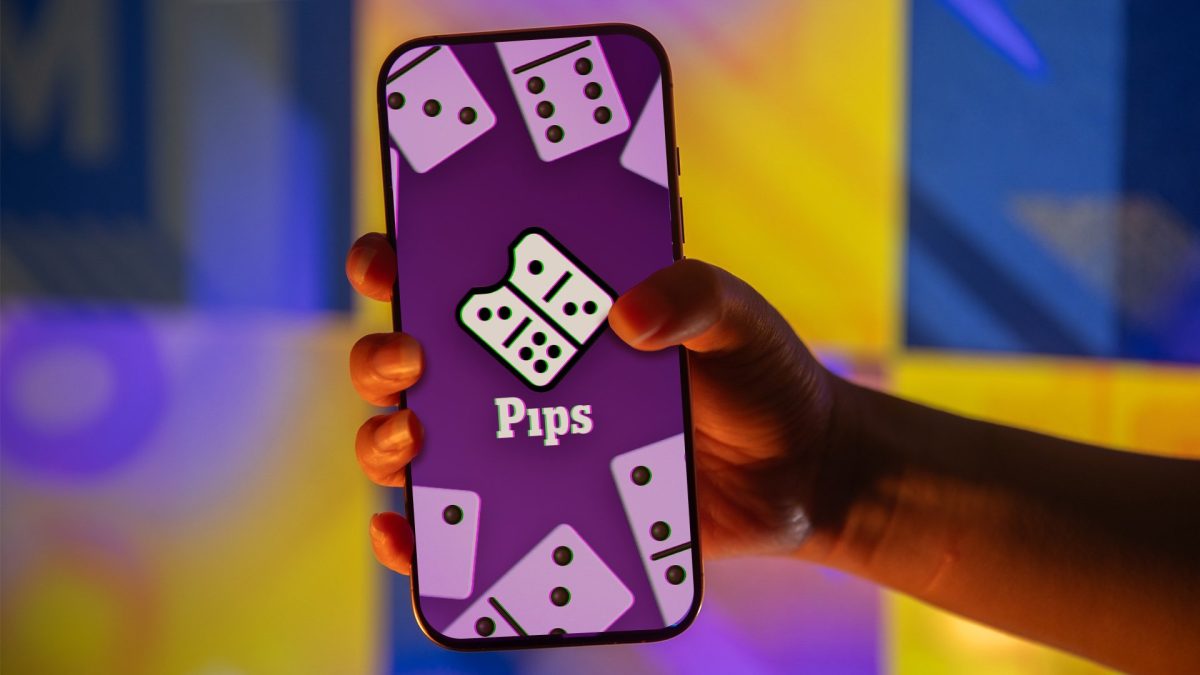
Have you ever found yourself staring at a grid of numbers, your brain stuck in a frustrating loop while trying to solve a daily puzzle? If so, you are certainly not alone. The New York Times, already a powerhouse in the digital puzzle arena with titans like Wordle and Spelling Bee, introduced a compelling new contender to its lineup in August 2025: Pips.
The Core Mechanics of a Modern Classic
At its heart, Pips is a clever and elegant reinvention of classic domino gameplay, transformed into a solitary, contemplative experience. The game presents players with a grid, challenging them to place virtual dominoes so that the pips, or dots, on each tile match the numbers displayed. This simple premise belies a surprisingly deep and satisfying logic puzzle that can range from a gentle warm-up to a serious cerebral workout.
What makes Pips so captivating is its seamless blend of familiar tactile concepts with clean digital execution. It takes the physical satisfaction of clicking domino tiles into place and pairs it with the structured challenge of a daily puzzle, creating a potent recipe for a new habit. For many, it has quickly become a cherished part of their morning routine, a few minutes of focused calm before the digital deluge of the day begins.
Conquering the Challenge Tiers
The game thoughtfully segments its difficulty into three distinct tiers: Easy, Medium, and Hard. This stratification ensures that both newcomers and seasoned puzzle veterans can find a suitable level of engagement. The Easy mode serves as an accessible on-ramp, teaching the fundamental rules and patterns without overwhelming the player.
Medium difficulty introduces more complex grid layouts and constraints, requiring players to think several moves ahead. The Hard mode, true to its name, demands meticulous deduction and often feels like a thrilling game of logical chess, where a single misplaced tile can unravel an entire solution. It is here that the game truly reveals its strategic depth, proving that a concept based on dominoes can generate formidable intellectual challenges.
Strategies for When You Hit a Wall
Every dedicated puzzler encounters moments of impasse, where the path forward seems completely obscured. Perhaps the grid is a tangled web of possibilities, or a single stubborn number refuses to cooperate with your planned placement. Currently, the game’s built-in hint system is somewhat limited, offering only broad nudges rather than step-by-step solutions.
This design choice is actually quite intentional, fostering a sense of personal accomplishment when you finally crack the code. However, knowing a few universal strategies can be the key to breaking through that mental block. A reliable first step is to search for the most constrained numbers on the board; a ‘6’ surrounded by other numbers has far fewer placement options than a ‘1’ in an open area.
Another powerful technique involves working from the edges inward. The borders of the grid often provide the most concrete starting points, as dominoes placed there have fewer connecting requirements. Think of it like framing a picture before filling in the detailed center. By systematically eliminating possibilities for these anchor points, the entire puzzle can begin to unravel in a satisfying cascade.
The Broader Context of NYT’s Gaming Empire
The launch of Pips is not an isolated event but a strategic move within The New York Times’ expanding digital ecosystem. The publication has masterfully cultivated a portfolio of daily puzzles that drive consistent user engagement and subscription loyalty. Games like Wordle demonstrated the immense power of a simple, shareable, daily challenge, creating a global cultural moment.
Pips follows this proven blueprint while carving out its own unique niche. It appeals to the same audience that enjoys spatial and numerical reasoning, offering an alternative to word-based games. For the Times, each new puzzle is another thread in a wider net, designed to attract and retain subscribers by becoming an indispensable part of their daily digital ritual. The question is not just about solving a puzzle, but about which platform you choose to do it on.
Why This Format Resonates with Modern Audiences
In an age of infinite scrolling and algorithmically-driven content, there is a profound appeal in a finite, solvable task. Pips provides a clear beginning, a defined struggle, and a concrete end, offering a micro-dose of accomplishment that is often missing from other digital interactions. It is a focused interlude of agency in a world of passive consumption.
The single-player nature is also crucial. This is a personal challenge, a quiet duel between you and the logic of the grid. There is no social leaderboard pressure, just the private satisfaction of seeing the final dominoes click perfectly into place. It is a form of digital mindfulness, requiring complete concentration that pushes other distractions to the periphery, if only for a few minutes.
The Future of Digital Puzzle Design
Looking ahead, the success of games like Pips signals a continued trend towards refined, elegant digital abstractions of classic games. We can expect to see further innovation in this space, perhaps incorporating adaptive difficulty, more complex tile sets, or even collaborative multiplayer modes. The core appeal, however, will always remain the clean, logical satisfaction of a problem well-solved.
The true legacy of Pips may be how it exemplifies the next wave of puzzle design: deeply accessible yet capable of real depth, familiar in concept but fresh in execution. It stands as proof that even the oldest games can find new life and a massive audience with thoughtful digital adaptation. As the Times’ gaming catalog grows, one wonders what other classic pastimes are waiting in the wings for their own clever reinvention.