Tutorials
Digital Discourse in Crisis: Analyzing the Global Backlash to Trump’s ‘Civilization’ Rhetoric
The Algorithm of Apocalyptic Language
In the hyper-connected digital age, words travel at the speed of light, carrying not just information but profound emotional and political payloads. A recent statement from former U.S. President Donald Trump, warning that ‘civilization will die tonight,’ has triggered a global firestorm of condemnation, illustrating how rhetoric functions as a powerful, and often dangerous, piece of social technology. This isn’t merely political theater; it’s a case study in how language, when amplified by modern media networks, can destabilize the very systems it claims to protect.
Global Condemnation as a Networked Response
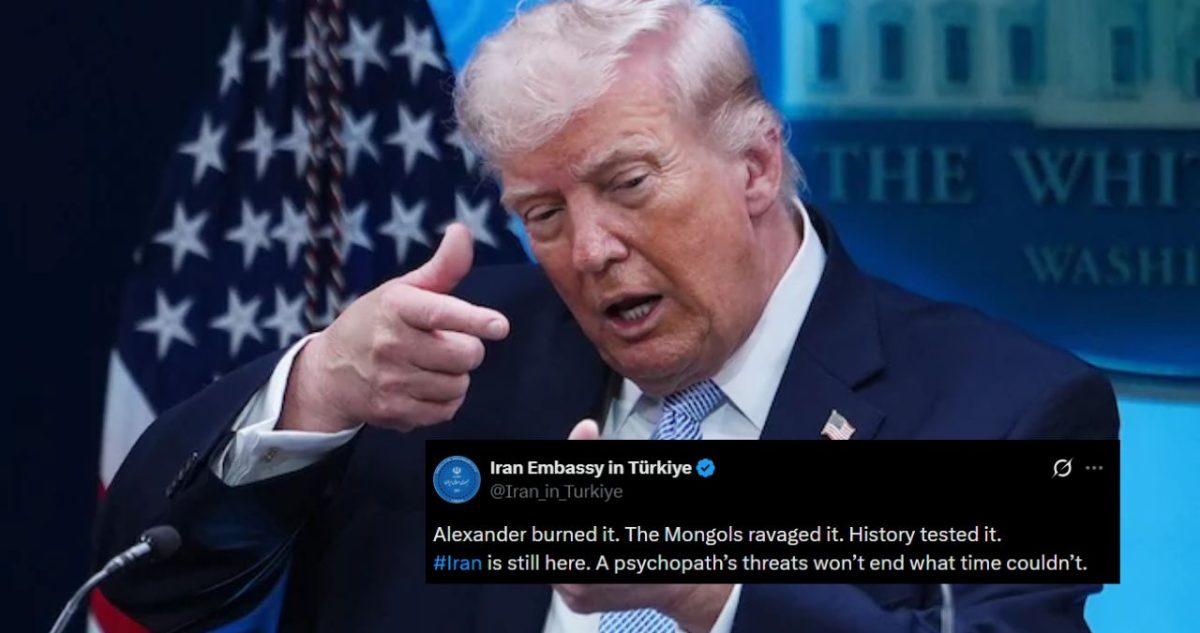
World leaders and diplomatic channels have responded with unusual unity, labeling Trump’s apocalyptic pronouncement as dangerous, unlawful, and morally indefensible. Think of this reaction as a distributed denial-of-service (DDoS) attack on a harmful narrative, with nodes from multiple nations simultaneously rejecting its validity. The swift, coordinated pushback highlights a growing international consensus: in an era of fragile digital democracies, incendiary speech is treated as a potential threat vector to global stability.
The condemnation extends beyond traditional political circles into the tech community, where the ethics of platforming such rhetoric are perpetually debated. When a public figure injects a phrase like ‘civilization will die’ into the global data stream, it doesn’t just exist as a soundbite. It becomes a piece of code, a meme that can be replicated, weaponized, and used to trigger real-world actions by bad actors online. The backlash, therefore, functions as a critical security patch, an attempt to inoculate the information ecosystem against a viral strain of disinformation.
Contextualizing the Rhetorical Threat Model
To understand why this specific remark landed with such force, we need to examine its context and underlying architecture. Apocalyptic language isn’t new in politics, but its deployment by a major figure with a vast digital following changes its risk profile considerably. It’s the difference between a localized script error and a critical zero-day exploit in the operating system of public discourse.
Framing an immediate event as an existential terminus for all civilization bypasses logical debate and appeals directly to base fear. For technologists, the parallel is clear: it’s a social engineering attack on the collective psyche. By short-circuiting reasoned analysis with an emotional ultimatum, such rhetoric seeks to gain administrative privileges over its audience’s worldview. The global condemnation serves as a form of intrusion detection, flagging this tactic as a breach of normative diplomatic and communicative protocols.
The Infrastructure of Modern Backlash
The speed and scale of the international response were themselves enabled by technology. Diplomatic cables have been replaced by instant, encrypted messaging and public statements disseminated through global news APIs. This digital infrastructure allowed the backlash to coalesce in near real-time, creating a formidable counter-narrative. It demonstrates how our connected world can both propagate a problem and mobilize its solution at unprecedented velocity.
However, this same infrastructure presents a paradox. The very platforms that spread the condemnations also gave the original statement its reach. This is the core tension of our digital public square: a system optimized for engagement often fails to distinguish between vital discourse and viral toxicity. The event forces a recurring question upon developers and platform architects: how do you build systems that promote healthy dialogue while containing informational pathogens?
Implications for the Tech Ecosystem and Digital Civics
For a technology audience, this incident is more than a political footnote; it’s a stress test for our digital civic infrastructure. The labels ‘dangerous’ and ‘unlawful’ used by world leaders aren’t just moral judgments. They point to a potential for tangible harm, where online rhetoric catalyzes offline violence, a dynamic witnessed in various global events over the past decade. The tech industry, often reluctantly, finds itself as the steward of the town square, responsible for the integrity of its underlying code.
The characterization of the rhetoric as ‘morally indefensible’ touches directly on the ongoing debate about ethical AI and content moderation. If an automated system were to analyze the phrase ‘civilization will die tonight,’ would it flag it as harmful? The statement contains no explicit threat of violence, yet human context renders its meaning clear. This gap between literal interpretation and understood intent remains one of the grand challenges in natural language processing and algorithmic governance.
Building More Resilient Information Systems
So, what’s the takeaway for builders and innovators? This episode underscores the critical need for digital literacy and media resilience as core features of our global network, not just optional add-ons. It’s about developing better social and technical filters. Technologically, this could mean advances in context-aware moderation tools or promoting decentralized, credential-based reputation systems for information.
Culturally, it demands a renewed focus on building communities and platforms that reward nuance and factual integrity over sensationalism. The backlash itself, as a coordinated, multi-source refutation, provides a blueprint. Perhaps the future of healthy discourse lies not in a single centralized moderator, but in robust, transparent networks of verification and context, much like how distributed ledgers establish trust. The goal isn’t to silence speech, but to ensure the information ecosystem has sufficient immune responses to prevent a single narrative from crashing the system.
Looking forward, the interplay between high-stakes political rhetoric and digital amplification will only intensify. The global reaction to Trump’s statement may well become a standard reference point, a benchmark for how the international community can collectively respond to destabilizing narratives in real-time. The next challenge for the tech world is to move beyond merely transmitting these reactions, and to start architecting the protocols that make destructive rhetoric less effective in the first place. The integrity of our shared digital future may depend on it.