Tutorials
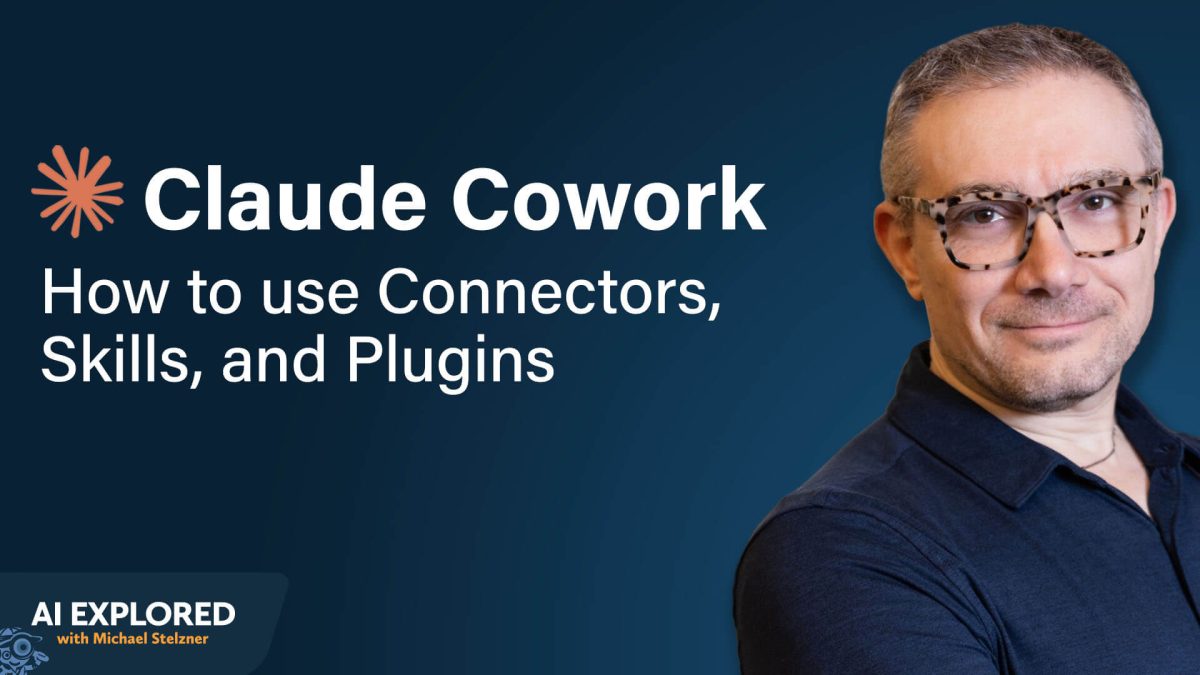
From Chat to Command: How Claude Cowork Transforms AI into a Real Productivity Partner
For most of us, working with AI has felt a bit like having a brilliant intern who needs constant supervision. You explain everything, watch their every keystroke, and just when you think progress is being made, you hit a wall. The conversation becomes too long, the context window fills up, and you start fresh, losing all momentum. It is an exhausting cycle that leaves many wondering if this is really the productivity revolution we were promised.
Enter Claude Cowork, a significant shift in how we interact with artificial intelligence. Instead of a chat window that demands your constant attention, Cowork offers a persistent environment where your work lives alongside the AI. Think of it less like a conversation and more like a collaborative workspace where files, tools, and tasks exist in a shared space, ready for you and your AI partner to manipulate together. It is designed to solve the fundamental friction of micromanaging every single prompt.
What Makes Claude Cowork Different?
The core innovation here is persistence and agency. In a standard chat interface, you are essentially feeding a machine one question at a time. Once you close the session, the context is lost. Claude Cowork changes that by allowing you to assign tasks that run independently, manage files directly within the environment, and connect external tools without needing to re-explain your project setup every time. It moves AI from a reactive tool to a proactive collaborator, one that can hold a complex, ongoing project in its mind.
This matters because real work is rarely linear. You might edit a document, realize you need data from a spreadsheet, and then need to generate an image for a social post. With Cowork, these transitions are fluid. The AI does not forget what you were doing just because you switched contexts. It feels less like talking to a machine and more like working with a partner who understands the bigger picture of your project, including the messy middle parts.
Managing Files Without the Headache
One of the most immediate benefits is file management. Instead of uploading a PDF, asking questions, and then downloading a new version, you can work directly within the Cowork environment. You can ask Claude to reorganize a folder, rename a batch of images, or even transcribe and summarize audio files. The AI sees your files not as single, static uploads but as part of a living project structure.
Consider the simple but tedious act of version control. Without Cowork, you might find yourself with files named “final_v2_reallyfinal.docx.” Within this new paradigm, you can simply instruct the AI to track changes, save backups, and maintain a clean file hierarchy. It is a small shift in workflow that eliminates a surprising amount of daily friction, freeing you to focus on the actual creative or analytical work.
Automating Your Repetitive Tasks
Automation is where Claude Cowork really flexes its muscles. You are no longer stuck manually repeating common web tasks or data entry. The system can be instructed to scrape specific data points from a list of URLs, populate a spreadsheet, and then generate a report. The key difference from traditional automation tools is the natural language interface. You do not need to write complex scripts; you just describe what you want to happen.
Think of it like this: instead of being the conductor of a tiny orchestra, you are now the composer. You set the intention, and Claude Cowork handles the execution. For a social media manager, this could mean automating the process of gathering engagement metrics across platforms. For a developer, it might mean automating code reviews or documentation generation. The barrier to entry is dramatically lower, making powerful automation accessible to anyone who can describe a process clearly.
Connecting Your Existing Tools
A tool is only as powerful as the ecosystem it lives in. Claude Cowork understands this and provides hooks to connect with the applications you already rely on. Whether it is pulling data from a CRM, pushing updates to a project management board, or syncing with cloud storage, the integration points are built to reduce copy-paste fatigue. You can connect your work calendar, your Slack channels, or your code repository, allowing the AI to act on information from across your digital life.
This interconnectedness is the secret sauce for deep productivity. It turns Cowork from a standalone app into a central nervous system for your digital workflow. Instead of checking five different dashboards, you can ask Claude Cowork for a single summary. It can draft an email based on a Slack thread, pull the relevant file from your drive, and schedule a meeting, all in one coordinated session. The goal is to minimize context switching, which is the true enemy of focus.
Getting Started Without the Overwhelm
Starting with a new system can feel daunting, especially when it promises to change your entire routine. The best way to begin with Claude Cowork is to pick one small, painful task you do every day. Do not try to automate your entire workflow on day one. Instead, choose a single file you rename frequently or a simple data pull you perform weekly. Teach the system that one task first.
Once you see how it handles that small win, the next steps become clearer. The interface is designed to be intuitive, guiding you through the process of setting up a persistent project. You will quickly find that the initial effort of setting up a workspace pays for itself in the first week. It is an investment in your own future sanity, a way to reclaim the hours lost to the endless loop of micro-managing your AI.
Looking ahead, the shift from chat-based interaction to persistent collaborative environments like Claude Cowork represents a fundamental evolution in how we define work itself. We are moving from commanding an oracle to sharing an office with a capable partner. The AI no longer just answers questions. It helps you build the answer. It manages the background noise so you can focus on the signal. The real question is not whether you should try it, but what you will do with all the time you get back.