Tutorials
The Digital Spectacle: How Celebrity Events Like a Swift-Kelce Wedding Mirror Modern Tech Trends
When Pop Culture Becomes a Data Stream
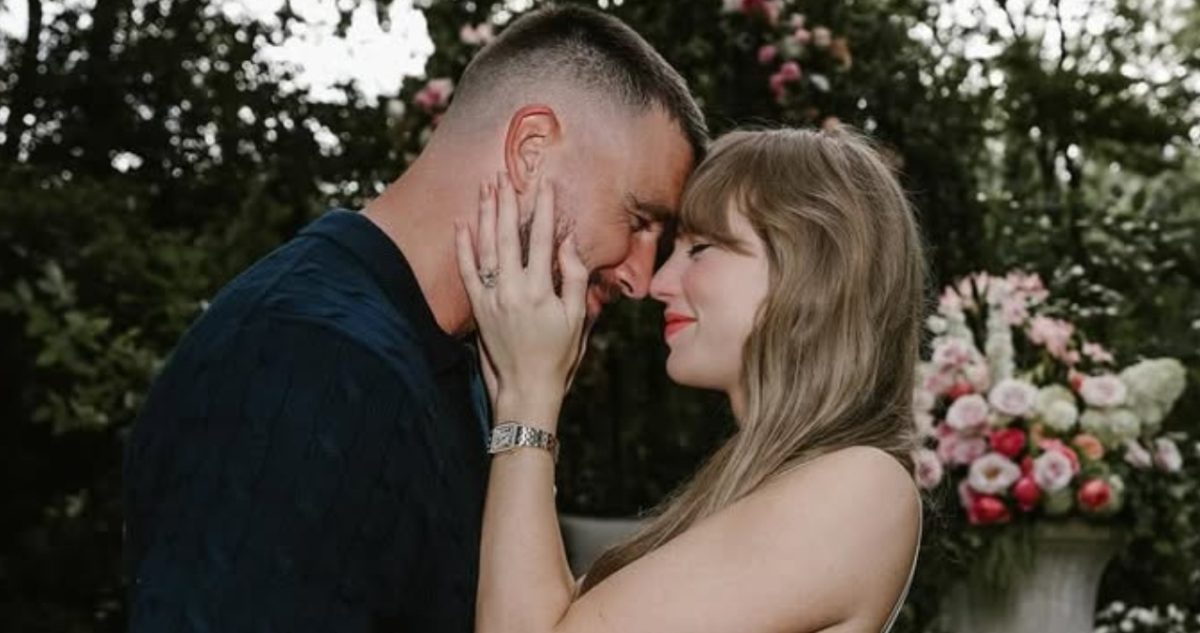
The intersection of global celebrity and personal milestone often creates a cultural vortex, pulling in media cycles and public attention with gravitational force. A potential union between music icon Taylor Swift and NFL star Travis Kelce represents such an event, one that transcends mere gossip to become a case study in modern digital consumption. While the original report suggested an engagement in 2025, the narrative’s evolution offers a fascinating lens through which to examine contemporary technology, from data virality to the architecture of attention itself.
The Infrastructure of Modern Rumor Mills
Today’s news ecosystem, particularly around high-profile figures, operates on a substrate of instant analytics and algorithmic amplification. A single detail, like a speculated wedding date or location, doesn’t just travel; it is processed, weighted, and distributed across platforms optimized for engagement. This isn’t your grandmother’s society page announcement. It’s a real-time data event, triggering content generation across blogs, social media, and even automated news aggregators that parse sentiment and forecast traffic potential.
The mechanism here is eerily similar to how monitoring tools track system logs or API endpoints for significant events. Just as a developer sets alerts for specific error codes or traffic spikes, media outlets have tuned their sensors to keywords like “Swift,” “Kelce,” and “wedding.” The resulting “update” is less a traditional news break and more a programmed response within a vast, interconnected content delivery network.
Privacy, Performance, and the Personal API
In an era where celebrities are often de facto brands, their life events are managed with the precision of a major product launch. Controlling the narrative involves a sophisticated blend of privacy tech, strategic leaks, and direct-to-fan communication channels. One could argue a figure like Taylor Swift operates a kind of “personal API,” where carefully curated data points about her life are released to the public, often to drive engagement with her primary art forms.
The speculation around dates and venues highlights a constant tension in the digital age: the clash between the human desire for private celebration and the economic engine of public persona. Every detail withheld becomes a cryptographic challenge for fans and media alike, while each confirmed snippet functions as a data packet that fuels weeks of analytical discourse. Is this the inevitable endpoint of personal branding in a fully quantified world?
Content Velocity and the Attention Economy
The journey from “engaged in 2025” to detailed wedding updates exemplifies the relentless content velocity demanded by today’s attention markets. A static fact has a short half-life; it must be iterated upon, given context, and connected to broader trends to maintain relevance. This creates a perpetual motion machine of speculation, expert commentary, and reactive journalism that mirrors the continuous deployment cycles in software development.
For tech professionals, this is a familiar paradigm. We see it in the constant stream of framework updates, product teasers, and conference keynotes that keep communities engaged. The underlying principle is identical: sustained engagement requires a steady drip of new, discussable information, turning a single event into a long-running saga with multiple development milestones.
Simulating the Experience: From Live Streams to Digital Twins
The public’s insatiable appetite for details points toward future experiential technologies. If a wedding of this magnitude were to occur, would it be live-streamed in 8K, with interactive fan commentary? Could we see the emergence of a “digital twin” of the event in a virtual space, allowing for a parallel, immersive celebration? The infrastructure for such a spectacle already exists, built for product launches and virtual concerts.
This push for virtual participation reflects a broader tech trend: the blurring line between physical experience and digital simulacra. The demand for “details inside” is no longer just for reading; it’s for constructing a mental, or soon a virtual, model of the event. In this way, celebrity culture quietly beta-tests the social adoption of metaverse-adjacent concepts.
Ethical Algorithms and the Noise Filter
For the tech-savvy reader, this entire cycle prompts questions about our own consumption tools. How do we design algorithms and news filters that distinguish between meaningful technological advancement and high-bandwidth cultural noise? The engineering challenge is significant, requiring natural language processing models that understand context, cultural impact, and personal relevance, not just keyword density and engagement metrics.
It’s a reminder that the tools we build to navigate information are constantly being tested by the sheer creative output of the human world, including its fascination with fairy-tale romances. Building a better informational immune system, one that allows for serendipity without succumbing to clickbait, remains one of the great unsolved problems in user experience design.
Beyond the Headline: The Data Legacy of an Event
The long-term digital footprint of such an event is perhaps its most technologically relevant aspect. Every article, social post, and video clip becomes a permanent node in the cultural graph, linked to biographies, discographies, and sports statistics. This interconnected data cloud will be analyzed by future AI training models, perhaps to understand 2020s societal values or to generate period-specific synthetic media.
In essence, the news cycle itself is the raw data collection phase. The speculation, the confirmation, the imagery, and the public reaction all form a rich, multi-modal dataset. It’s a spontaneous, large-scale exercise in human emotional and social response logging, conducted in public and with surprisingly consistent metadata.
Looking forward, the convergence of celebrity culture and personal technology will only deepen. We are moving toward a world where life’s major milestones, for those in the public eye, will be interactive, multi-platform, and digitally native experiences. The next update might not be about a date or location, but about the blockchain-verified guest list, the augmented reality wedding favors, or the AI-composed ceremonial song. The story, therefore, is far less about a single couple’s plans and far more about how our tools and platforms are reshaping the very fabric of how we share, celebrate, and connect.