Tutorials
Beyond Surface Scans: How AI-Powered Deep Research Reveals Hidden Market Advantages
The Information Overload Dilemma in Modern Business
Staying ahead in any competitive industry today feels less like a strategic pursuit and more like drinking from a firehose. Executives, analysts, and marketers are perpetually buried under an avalanche of reports, news alerts, and social media chatter. The real challenge isn’t a lack of data; it’s the sheer impossibility of synthesizing it all into actionable intelligence before the moment passes. How many crucial signals are lost in the noise simply because there aren’t enough hours in the day?
From Manual Grind to AI-Powered Synthesis
This is where the paradigm of deep research is undergoing a radical transformation. Traditional methods, involving countless browser tabs and manual cross-referencing, are becoming obsolete. Enter advanced AI deep research, a methodology that leverages large language models and specialized agents to compress what was once a week-long analytical slog into a matter of hours. Think of it as moving from a solitary librarian scanning index cards to deploying a team of hyper-specialized, indefatigable research assistants who never sleep.
What Constitutes True AI Deep Research?
It’s crucial to distinguish this from simple web scraping or keyword alerts. True AI-driven deep research involves multi-layered analysis. The system doesn’t just collect links; it reads, comprehends, and connects disparate pieces of information from patents, academic journals, financial filings, niche forums, and global news. It identifies emerging patterns, contradictions between public narratives and data, and subtle shifts in sentiment that a human researcher, pressed for time, might easily overlook. The output isn’t a data dump; it’s a synthesized narrative with evidence.
The Critical Role of Strategic Prompt Engineering
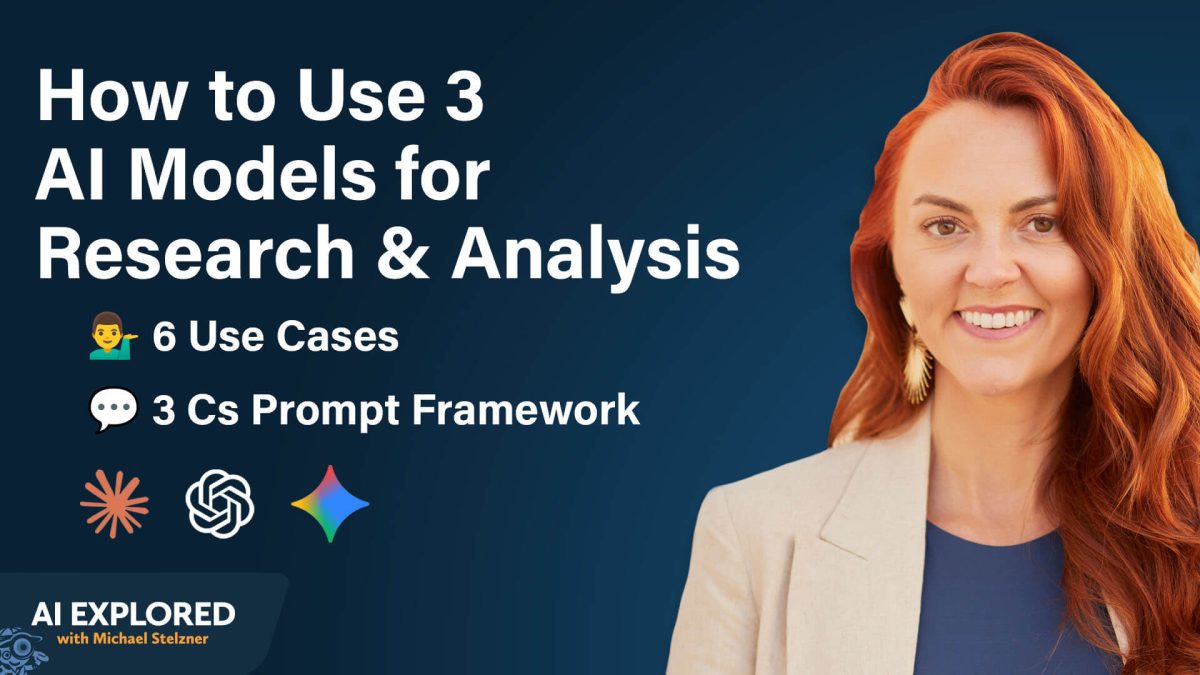
The efficacy of this process hinges entirely on the quality of the prompts guiding the AI. A vague prompt yields generic, surface-level results. A well-crafted prompt, however, acts as a precise blueprint for discovery. The proven framework experts recommend moves beyond simple questions. It involves setting clear context, defining specific domains of search, requesting comparative analysis, and instructing the AI to challenge its own assumptions. For instance, instead of asking “What are the trends in battery tech?” a strategic prompt might be: “Act as a senior analyst for an automotive venture capital firm. Identify three emerging solid-state battery startups outside of Asia whose recent patent filings contradict the published roadmaps of industry leaders, and hypothesize on the technological divergence.”
Tool Selection: Beyond the Chat Interface
While versatile models like ChatGPT or Claude provide a starting point, the most powerful insights often come from tools built specifically for autonomous deep research. Platforms like Perplexity AI (with its Pro search), Consensus for scientific literature, or custom-built agents using frameworks like LangChain or CrewAI can autonomously traverse and evaluate sources with cited credibility. These tools are designed to follow a chain of thought, pursue tangential leads, and synthesize findings across multiple iterations, mimicking the best human researchers’ curiosity but at a scale and speed that is simply unmatchable.
Uncovering What Competitors Miss
The ultimate advantage here is visibility into the weak signals and latent trends. Your competitors are likely reading the same top-tier industry newsletters and mainstream reports. AI deep research can delve into the long tail of information: a cryptic comment by a supplier on an engineering forum, an obscure regulatory filing in a foreign market, or a subtle change in the hiring patterns of a rival firm. These are the puzzle pieces that, when assembled, reveal a picture of future market moves, potential disruptions, or unmet customer needs long before they become headline news. It’s competitive intelligence on steroids, but legal and ethical.
Integrating Insights into Decision Velocity
The real metric of success isn’t the report generated; it’s the reduction in decision latency. When a leadership team receives a concise, well-sourced briefing on a nascent opportunity or threat, they can pivot, allocate resources, or formulate a strategy while others are still organizing their first meeting to “look into that thing.” This compression of the analysis cycle directly translates to first-mover advantage, whether in seizing a partnership, adjusting a product roadmap, or crafting a preemptive communications strategy.
Navigating the Pitfalls and Ethical Considerations
Of course, this power requires responsibility. AI models can hallucinate or inherit bias from their training data. A core part of the framework is building in verification steps; treat AI as a phenomenal junior analyst whose work must be fact-checked against primary sources. Furthermore, ethical use is paramount. This is about understanding the public landscape, not corporate espionage. The goal is smarter, more thorough analysis of available information, not accessing proprietary or private data.
The Future of Strategic Insight
Looking forward, AI deep research will evolve from a proactive tool to a predictive, integrated layer within business intelligence platforms. We’ll see systems that don’t just answer questions but continuously monitor a defined information universe, alerting teams to anomalies and correlations in real time. The human role will shift from gatherer to strategic interpreter and action-taker. In the relentless race for insight, the winners won’t necessarily be those with the most information, but those who have taught their machines to find the meaning within it fastest. The question for businesses now is not if they should adopt this approach, but how quickly they can master it before their competition does.